
The Loss of Little Work
How AI quietly pulls small jobs back inside the firm
There’s a strange quiet settling over parts of the economy. Not in the big, high-stakes projects—those multi-year transformations and major rollouts are still moving at full tilt.
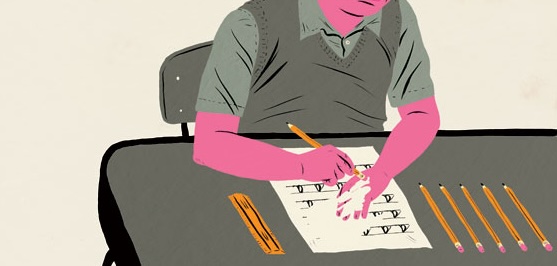
The quiet is in the little things. The one-page competitor snapshot you might have sent to a research firm. The quick landing-page copy your agency would have knocked out between campaigns. The minor integration fix for a niche dev shop, the lightweight explainer video for a production house, the quick customer-journey sketch for a consultant. Increasingly, this work never leaves the building. It doesn’t show up as a cancelled contract; it simply never gets briefed out. Someone inside “does a first pass with the AI,” and that first pass is often good enough.
This shift—the quiet loss of little work—is an early sign that AI is doing more than boosting productivity. It’s beginning to redraw the boundary between what organisations do themselves and what they hand off to others in the value chain. The change isn’t happening because AI removes market frictions, but because it lowers the internal coordination cost of getting small, well-specified tasks done.
By “little work,” I don’t mean low-value work. I mean the small, tightly scoped, modular tasks that sit everywhere inside an organisation: a few hours of analysis, a quick copy variant, a short script, a simple integration, a sketch of a process or customer flow. These tasks span creative, analytical, operational, customer-facing and product work. They’re easy to price and easy to brief, and every firm produces a constant drizzle of them. Historically, much of that drizzle went to agencies, consultancies, research shops and specialist vendors—not always because those suppliers were more capable, but because tapping your own organisation for one more little thing was often a distraction or not a good use of resources.
Internal coordination cost is the hidden friction here. To get two hours of work out of a large organisation, you rarely spend only two hours. You need to get onto someone’s radar, negotiate your way into their backlog, align on context and constraints, secure approvals, and loop in adjacent teams. By the time the job is done, the organisation has burned through time, attention, cognitive bandwidth, calendar slack and system overhead. For small jobs, that internal cost was often disproportionate, which is why the default move was to push the work to a supplier who could absorb the routing, scheduling and quality control on their side. You paid a margin, but you saved your own people from the burden of coordination.
These are the sort of issues we think about at DeepFlow.com, and AI changes the equation by quietly powering up the internal engine. Strip away the hype, and you see models being used for precisely the categories of work that once overflowed to suppliers. A marketer drafts copy variants in minutes. A strategist pulls together a fast, synthesised view of a new market. A CX lead generates a journey map and workshop materials. A product manager drafts a spec and has an engineer tweak a snippet of generated code. A sales enablement lead uses AI for first-cut talk tracks and objection-handling scripts. The people are the same, and the outputs are similar, but the production engine behind the work is very different.
The key shift is the marginal cost of asking for “one more thing.” With AI, a usable first version arrives almost instantly. Specialists become editors and approvers rather than sole producers. The coordination overhead per unit of output drops enough that the internal engine can run hotter without overheating. Once that happens, fewer small jobs spill over outside the organisation.
What hasn’t fallen is the coordination overhead of using external partners for tiny tasks. Suppliers still need onboarding, briefs, expectation-setting, procurement approval and, in regulated environments, risk and compliance checks. For meaningful, multi-month work, those steps are worth it. But for small, well-specified jobs, the comparison has flipped. Before AI, the internal coordination cost was so high that it made sense to send these small tasks out. Now the internal cost is low enough that doing them inside—AI-assisted—often wins.
In economic terms, this marks a subtle but real shift in the boundary of the firm. Classic theory says firms choose between doing work internally or through the market based on relative costs. AI is now altering the internal cost structure for small, well-defined, repeatable tasks—the kind that every function generates and that used to justify a long tail of small suppliers. These are the first tasks to be automated, the easiest to bring back inside, and the ones that historically have generated steady revenue for agencies, research shops, and boutique firms. Anecdotally, I’m now seeing firms in the market with 25-30% less revenue in 2025.
The real story in the loss of little work isn’t automation; it’s coordination. As AI flattens the cost of producing small tasks, the remaining constraint is how quickly an organisation can align, approve and integrate them.
Firms with sluggish governance will discover that their internal bottlenecks—not their technology—limit the gains. And as more first drafts originate inside, the centre of gravity shifts from external execution to internal orchestration. The scarce talent isn’t the person who can write the copy, map the process or draft the spec, but the one who can frame the problem, judge the output and stitch it into the larger system. That’s the quiet consequence of AI: not the disappearance of small jobs, but the elevation of coordination speed and sense-making as the new sources of advantage.
Further Reading:
- Jain, N., Suvarchala, K., & Wattal, S. (2025). Capability Joint Effects, Transaction Costs, Outsourcing Decisions, and Performance. Industrial Marketing Management (in press).
This paper integrates transaction-cost economics (TCE) with the resource-based view to show how firms’ internal capabilities and coordination costs jointly shape outsourcing vs insourcing decisions and associated performance. While technology-agnostic, it gives a ready-made TCE framework for your “AI changes internal cost structure, so optimal make–buy boundary moves” story.