
Writing at the intersection of AI, science and strategy.
Essays on machine intelligence, technological change and the organisational questions that emerge when capability shifts.
Latest Essays
-
Beyond Human-in-the-Loop
Why AI's organisational value depends on designing coordination, trust signals, and human-AI decision roles rather than defaulting to human-in-the-loop oversight.
-
Governance is the product now
Why agentic AI turns governance into an operational control problem, and the observability, permissions, checkpoints and audit trails needed to manage it.
-
Five AI Futures: A Scenario Playbook for 2025–2035
Five plausible AI trajectories from diminishing returns to transformative takeoff, with early indicators and no-regrets moves for organisations.
-
The Loss of Little Work
AI is quietly pulling small, well-scoped jobs back inside firms by lowering the coordination cost of getting a first useful version done internally.
-
The Future of Work in the Age of AI
Why the future workplace depends on redesigning tasks around AI, preserving human judgment and building continuous adaptation into workforce design.
-
Machine-Managed Enterprises
If AI keeps improving, firms may move beyond simple automation toward machine-managed value chains that require new forms of orchestration and governance.
-
Cognitive Crossover
A case for continued AI scaling, connecting empirical scaling laws with broader arguments about universality, capability growth and the reshaping of work.
-
When AI Learns Without Us
A survey of self-improving AI methods that learn from confidence, consistency and code changes rather than direct human labels or rewards.
-
The Future of the Firm
How more capable AI could lower internal coordination costs, shift make-versus-buy decisions, and push firms toward greater vertical integration.
-
The AI Sovereignty Imperative
Why compute is becoming a strategic national resource, and how access to AI infrastructure may determine scientific capacity, public-sector power and economic relevance.
-
Financializing productivity: coordination capacity
How metered machine intelligence shifts productivity from headcount to coordination capacity, changing organisational design, cost structures and risk.
-
The Age of Zero Marginal Cost Intelligence
What happens to labour, markets and human purpose when intelligence becomes abundant, reproducible and close to free at the margin.
-
The Frontier Firm
A model of the agent-native company: small, senior human teams directing autonomous systems while data loops, judgment and governance become the real moats.
-
The Angels of Apocalypse: What If AI Stocks Are a Hedge Against the Collapse of Human Labour?
An asset-pricing argument that AI stocks may be valued not only as growth bets, but as imperfect hedges against the erosion of labour income.
-
Beyond the Turing Test: The New Age of Narrow AI Mastery
How rapidly improving narrow AI complicates familiar ideas about intelligence, benchmarking and the significance of passing the Turing Test.
-
Agency in an Accelerated World
Why retaining human agency in faster AI systems requires new abstractions, oversight structures and interfaces that translate machine activity into strategic control.
-
Can AI Work an 8-Hour Day?
Using METR’s task-endurance results as a starting point, this essay asks when AI agents might sustain hours of useful work and what that would mean for organisations.
-
Proximal Value
A closer look at the y-axis of a Wardley Map, and how distance can help us think about purpose, coupling and the boundaries of an assembly.
-
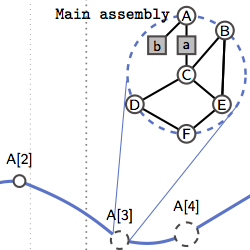
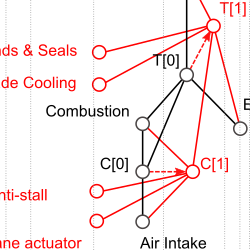
Structural Deepening
A closer look at Simon Wardley’s mapping framework and the idea of structural deepening as a way to understand invention, dependency and business evolution.
-
Welcome!
An introduction to the blog: why I am writing, what I am trying to understand, and how AI, invention and technology strategy shape the themes collected here.
-
What Blockchain can do for real estate
How distributed ledgers could give real-estate transactions durable records of ownership, trust and provenance across fragmented supply chains.

















subscribe via RSS